Best Camera for YouTube 2026: 5 Proven Picks, No Regrets
Researched Picks for Vlogging, Videography, and Everyday Creators
Choosing the best camera for YouTube can feel confusing when every brand promises sharp 4K and perfect autofocus. To build this guide, we researched and compared specs, expert reviews, and creator feedback across five popular models. This guide shows which camera suits your channel and budget.
This article is for new and growing creators who want an honest recommendation before spending money. It also covers videography, sports, and nature filming, since not every channel needs the same camera setup.
| Key Takeaways for Readers Sony ZV-E1 = best premium pick, with a full-frame sensor, strong low-light footage, and pro-level stabilization. Panasonic Lumix G100D = best beginner kit, with a tripod grip, flexible audio options, and a lower price. Nikon Z50II = best Nikon camera here, with fast subject-detection autofocus and a built-in viewfinder. Sony ZV-1 II = best compact vlogging camera, with a wide 18mm lens and a flip-out screen. DJI Osmo Pocket 3 = best pocket camera for travel vlogs, with built-in gimbal stabilization. Rule of thumb: choose for autofocus and audio first, then worry about resolution. |
Who This YouTube Camera Guide Is For
This guide is for beginners, vloggers, and small business owners who want researched, data-backed guidance instead of marketing claims. It also helps creators compare options for videography, sports clips, or wildlife footage.
Skip this guide if:
- You only need a simple webcam for desk streaming or video calls
- You want a cinema camera with XLR audio and RAW video
- You already own a camera that meets your needs
Quick Verdict: Top Picks at a Glance
| Camera | Best For | Type | Price (approx.) |
|---|---|---|---|
| Sony ZV-E1 | Best premium pick | Mirrorless full-frame | ~$2,200 (body) |
| Panasonic Lumix G100D | Best beginner kit | Mirrorless Micro Four Thirds | ~$700 (kit) |
| Nikon Z50II | Best Nikon camera | Mirrorless APS-C | ~$910-$1,010 (body) |
| Sony ZV-1 II | Best compact | Compact, 1-inch sensor | ~$800-$1,000 |
| DJI Osmo Pocket 3 | Best pocket gimbal | Gimbal camera | ~$439 |
Quick take: If you only read one line, read this: the Panasonic Lumix G100D kit is the easiest start for most new channels, while the Sony ZV-E1 is the pick if you want the best video quality.
Sony ZV-E1: Best Premium Pick
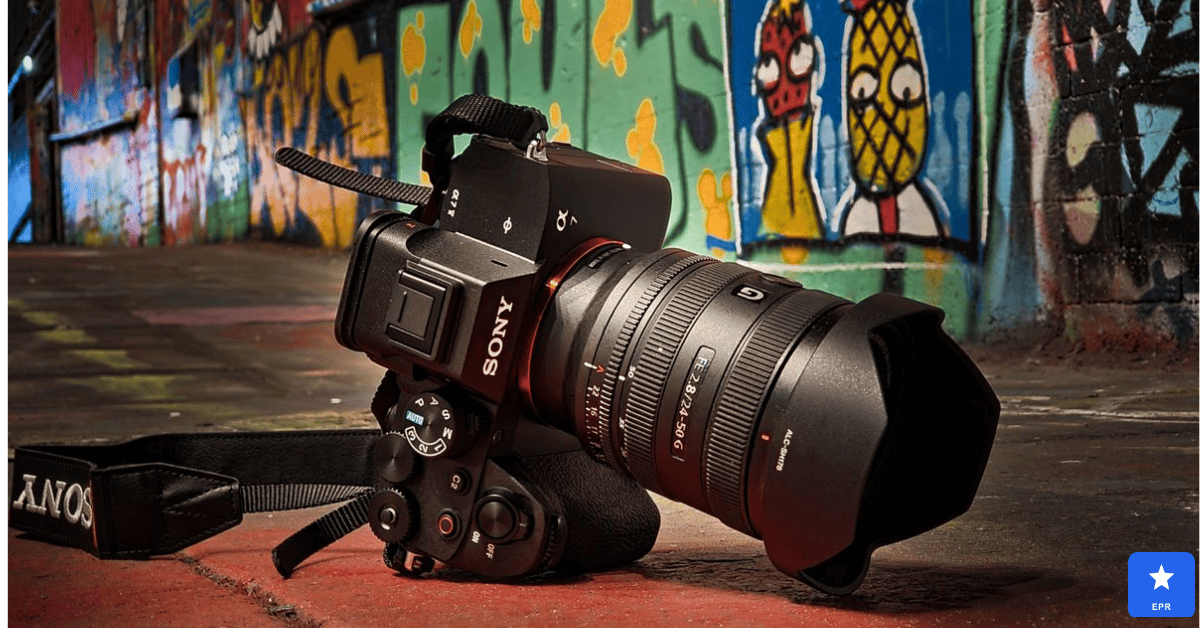
The Sony ZV-E1 is the premium pick for creators who film in dim rooms, at events, or in the evening. It pairs a 12.1MP full-frame sensor with Sony’s AI-based subject recognition, and it records 4K60 in 10-bit 4:2:2. The lower resolution is deliberate, since fewer, larger pixels help footage stay clean when the light drops.
Sony also adds five-axis stabilization with a Dynamic Active mode, which helps handheld walking shots look steadier. A built-in three-capsule microphone, mic and headphone jacks, and a vari-angle touchscreen cover audio and framing. The trade-off is cost, since it sits far above every other camera in this guide.
Design & Features
| Feature | Details |
|---|---|
| Sensor | 12.1MP full-frame (about 10.1MP used for movies) |
| Video | 4K up to 60p, with 10-bit 4:2:2 options |
| Stabilization | 5-axis SteadyShot with Dynamic Active, Active and Standard modes |
| Audio | 3.5mm mic and headphone jacks, built-in 3-capsule mic |
| Screen | 3-inch vari-angle touchscreen, no viewfinder |
| Battery | NP-FZ100, about 95 minutes of actual recording (CIPA) |
| Weight | About 483g with battery and card (399g body only) |
| Price | About $2,200 body (launch price; check Sony for current pricing) |
Pros
- Full-frame look gives soft, cinematic backgrounds
- Suits creators who also take on client work
- Unlikely to be outgrown any time soon
Cons
- Price is hard to justify for a brand-new channel
- Low 12MP resolution limits large photo prints
- Lens kits add a lot to the total cost
Panasonic Lumix G100D: Best Beginner Kit
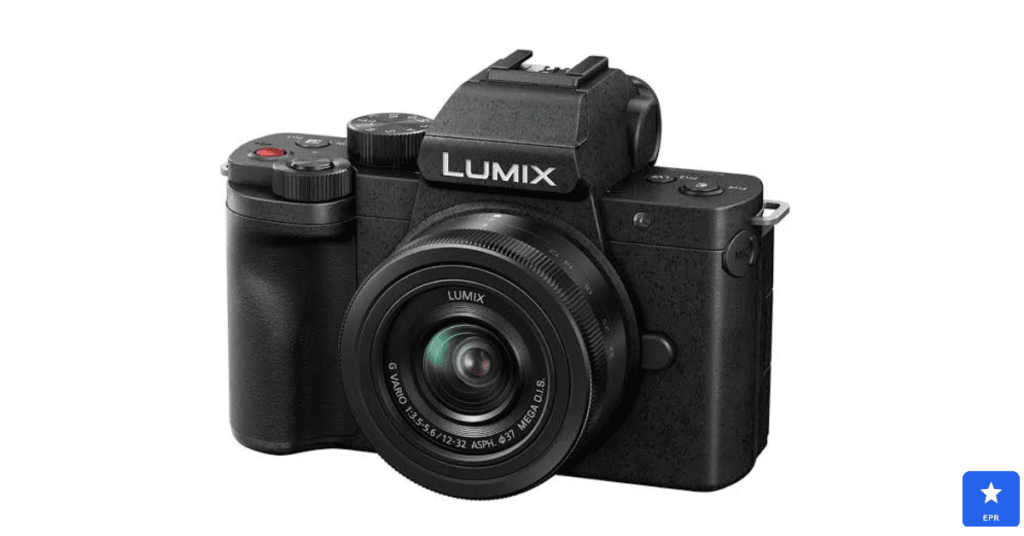
The Panasonic Lumix G100D is a beginner-friendly vlogging kit that includes a 12-32mm lens and a tripod grip. It records 4K at 30p and uses five-axis hybrid stabilization for video, which drops to four axes in 4K. For first-time creators, the all-in-one bundle removes the guesswork about what to buy next.
Audio is its quiet strength. A 3.5mm external mic socket is included, and the built-in microphone offers Auto, Front, Back, and Surround modes for different filming situations. The compromise is battery life, which Panasonic rates at up to 80 minutes of continuous 4K30 recording, and the lack of 4K60 video.
Design & Features
| Feature | Details |
|---|---|
| Sensor | 20MP Micro Four Thirds |
| Video | 4K up to 30p (no 4K60) |
| Stabilization | 5-axis hybrid with the kit lens (4-axis in 4K) |
| Audio | 3.5mm mic socket, built-in mic with Auto, Front, Back and Surround modes |
| Screen | Articulating touchscreen |
| Battery | Up to 80 minutes continuous 4K30 (about 40 with stop-start use) |
| Weight | 346g body, 99g tripod grip |
| Price | About 669 GBP as a kit with tripod grip (UK retailer), US price varies |
Pros
- Everything arrives in one box, ready to film
- Tripod grip doubles as a handle for selfie-style shooting
- Good stepping-stone before spending big
Cons
- Older design than the other cameras here
- Smaller sensor struggles more in dim light than APS-C rivals
- Kit lens has a limited zoom range
Nikon Z50II: Best Nikon Camera
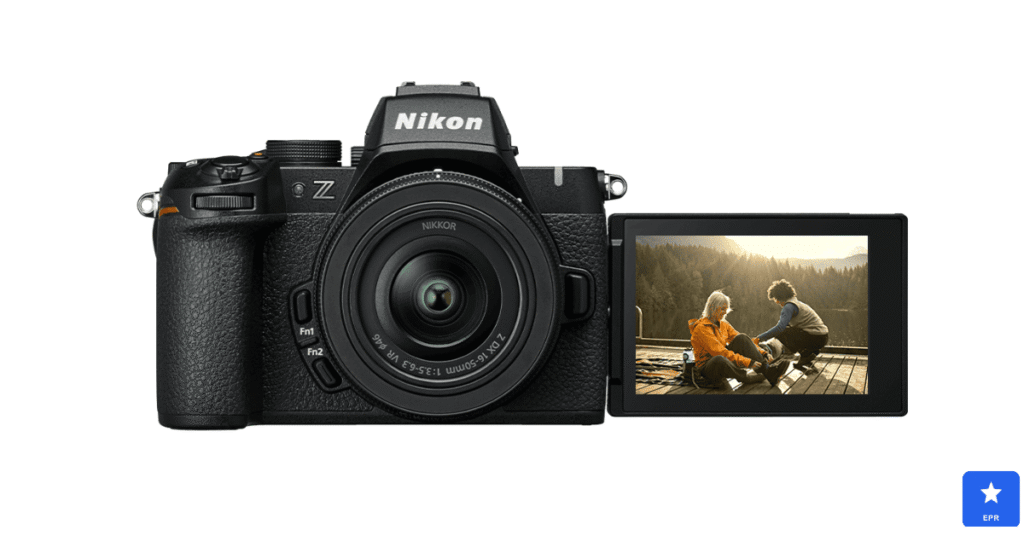
Fans looking for the best Nikon camera for video should consider the Nikon Z50II. It uses Nikon’s Expeed 7 processor and subject-detection autofocus covering nine subject types. Reviewers call the autofocus fast and accurate, like Nikon’s more expensive models, which helps when filming moving subjects like pets, sports, or birds.
It also adds a 2.36m-dot viewfinder, which the Sony ZV-E1 skips. The vari-angle touchscreen flips out for vlogging. On the downside, 4K60 carries a 1.5x crop, and there is no in-body stabilization. At 550g with battery and card, it is also the heaviest camera here.
Design & Features
| Feature | Details |
|---|---|
| Sensor | 20.9MP APS-C |
| Video | 4K60 (1.5x crop), 4K30 uncropped (oversampled from 5.6K) |
| Autofocus | Subject detection for nine subject types, including people, animals, birds and vehicles |
| Stabilization | Lens-based VR or electronic stabilization (narrows the view about 1.25x per Nikon), no in-body stabilization |
| Screen | 3.2-inch vari-angle touchscreen, 2.36m-dot viewfinder |
| Ports | Headphone socket, USB-C (also works for webcam use) |
| Battery | EN-EL25a, about 55 minutes of video (Nikon rating) |
| Weight | About 495g body only (550g with battery and card) |
| Price | About $910-$1,010 body (check Nikon US) |
Pros
- Comfortable, secure grip for long shoot days
- Photo and video in one body suits creators who also shoot stills
- Nikon’s color presets give quick, stylized looks
Cons
- Fewer native DX lenses than Sony offers
- Less suited to run-and-gun vlogging than smaller bodies
Sony ZV-1 II: Best Compact Camera
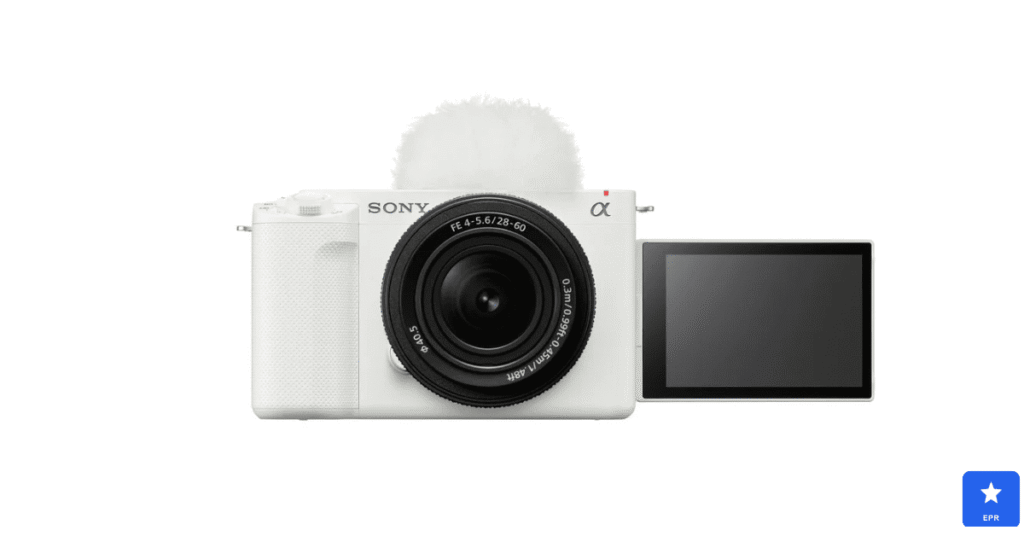
The Sony ZV-1 II is a pocket-sized camera built around a 20MP 1-inch sensor and an 18-50mm f/1.8-4.0 lens. The wider 18mm view is the big upgrade, because arm-length selfies and group shots finally fit in the frame. Video quality beats a smartphone, and the autofocus is fast and accurate.
There is no lens to buy or swap, which keeps the setup simple. A three-capsule microphone array with a windscreen delivers decent built-in audio. The compromise is the shorter zoom range compared with the first ZV-1. It also relies on cropped digital stabilization, and the price sits close to larger interchangeable-lens cameras.
Design & Features
| Feature | Details |
|---|---|
| Sensor | 20MP 1-inch BSI-CMOS |
| Lens | Fixed 18-50mm, f/1.8-4.0 |
| Video | 4K up to 30p, plus 1080p and 720p high-speed modes |
| Stabilization | Active digital stabilization (crops slightly), no optical stabilization |
| Audio | 3.5mm mic jack, three-capsule mic array with windscreen |
| Screen | 3-inch vari-angle touchscreen |
| Battery | NP-BX1, about 45 minutes of actual recording (CIPA) |
| Weight | About 292g with battery and card (266g body only) |
| Price | About $800-$1,000 depending on retailer |
Pros
- Good first step up from a smartphone for new creators
- Easy to hold at arm’s length for selfie-style shooting
- Pocketable for daily vlogs and travel
Cons
- You cannot upgrade the lens as your channel grows
- Less background blur than larger-sensor cameras
- Not ideal for sports or distant subjects
DJI Osmo Pocket 3: Best Pocket Gimbal Camera
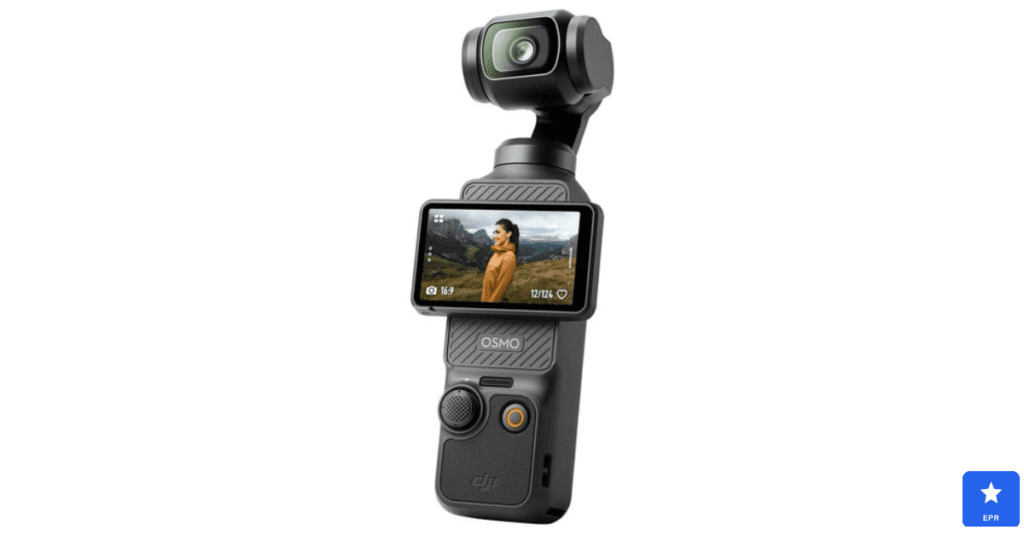
The DJI Osmo Pocket 3 is the easiest way to get smooth, stable footage while walking. A handheld gimbal does the stabilizing, and a 1-inch sensor handles tricky light well. It records 4K at up to 60fps, with 120fps slow motion, and offers 10-bit video. It weighs only 179g.
Its larger rotating screen makes framing simple, and it pairs directly with the DJI Mic 2 for clean audio. The standard battery is rated at 166 minutes. The drawbacks are a fixed 20mm-equivalent lens and a more fragile build than a typical action camera. Reviewers also note that auto exposure tends to brighten footage.
Design & Features
| Feature | Details |
|---|---|
| Sensor | 1-inch |
| Lens | 20mm equivalent, f/2.0, fixed |
| Video | 4K up to 60fps, 4K120 slow motion, 10-bit with D-Log M |
| Stabilization | Built-in 3-axis gimbal, ActiveTrack 6.0 subject tracking |
| Audio | Built-in microphones, connects directly to the DJI Mic 2 |
| Screen | 2-inch rotatable touchscreen |
| Battery | About 166 minutes (DJI rating at 1080p/24fps, for reference) |
| Weight | About 179g |
| Price | About $439 (Creator Combo about $549; stock varies) |
Pros
- Walking and travel shots look smooth without extra gear
- Simple enough for first-time creators
- Fits in a pocket, so you will actually bring it
Cons
- Takes time to discover all its features
- More delicate than an action camera
- Stock can run out (listed out of stock on DJI’s store)
Price Comparison: What Each Camera Costs
| Camera | Approx. Price | What You Get | Value |
|---|---|---|---|
| Sony ZV-E1 | About $2,200 body | Full-frame sensor, 4K60, 5-axis stabilization | Premium |
| Panasonic Lumix G100D | About $700 kit | 12-32mm lens, tripod grip, 4K30, mic socket | Best value |
| Nikon Z50II | About $910-$1,010 body | Viewfinder, subject-detection autofocus, 4K60 | Mid-range |
| Sony ZV-1 II | About $800-$1,000 | Built-in 18-50mm lens, 1-inch sensor | Premium compact |
| DJI Osmo Pocket 3 | About $439 (Creator Combo $549) | Gimbal, 1-inch sensor, 4K120 slow motion | Lowest cost |
Who Is Each Camera Best For?
- Sony ZV-E1 is best for: creators who film in low light, take client work, or want a long-lasting full-frame camera.
- Panasonic Lumix G100D is best for: beginners who want a ready-to-film kit with a tripod grip and good audio options.
- Nikon Z50II is best for: creators who film moving subjects like sports, pets, or birds and want a viewfinder.
- Sony ZV-1 II is best for: vloggers who want a small, no-fuss camera with a wide lens for selfie-style filming.
- DJI Osmo Pocket 3 is best for: travel vloggers who want smooth, walking footage without carrying a bulky rig.
How Do These Cameras Compare With Each Other?
- Sony ZV-E1 vs Panasonic Lumix G100D: Sony wins on low light, stabilization, and 4K60, while Panasonic wins easily on price and beginner value.
- Nikon Z50II vs Sony ZV-E1: Nikon adds a viewfinder and costs far less, but Sony has the larger sensor and better stabilization.
- Sony ZV-1 II vs DJI Osmo Pocket 3: Sony feels more like a traditional camera, while DJI gives far smoother walking footage for less money.
How to Choose the Right YouTube Camera?
The best camera for video recording is the one you will carry every day and trust in any light. Use these points to narrow your shortlist before spending money.
- Autofocus: reliable face and eye tracking matters more than extra megapixels for solo creators.
- Audio: pick a camera with a mic jack, since clear sound keeps viewers watching longer.
- Screen: a flip-out or vari-angle display makes framing yourself much easier.
- Stabilization: the Nikon Z50II lacks in-body stabilization, so consider a gimbal or a stabilized lens.
- Budget: include the lens, memory cards, and a spare battery in your total cost.
Frequently Asked Questions (FAQs)
Q1: What is the best camera for YouTube beginners?
The Panasonic Lumix G100D kit is an easy pick for most beginners, thanks to its low price and included tripod grip.
Q2: Which is the best camera for videography on a budget?
The Panasonic Lumix G100D and DJI Osmo Pocket 3 give you ready-to-film setups at the lowest cost.
Q3: What is the best starting DSLR for YouTube?
Brands now focus on mirrorless, so a mirrorless body like the Panasonic G100D is the smarter starter.
Q4: What is the best Nikon camera for YouTube?
The Nikon Z50II is our pick, with fast subject-detection autofocus, 4K60 video, and a built-in viewfinder.
Q5: Which camera works for sports videography or birding?
Choose fast subject-tracking autofocus plus a telephoto lens; the Nikon Z50II is a strong starting point.
Q6: Do I need 4K to start a YouTube channel?
No, but 4K gives sharper footage and lets you crop in editing without losing quality.
Final Verdict
After researching autofocus, video quality, audio, and price across five cameras, the Sony ZV-E1 earned our top spot for pure video quality. The Panasonic Lumix G100D is the smarter buy if budget matters most, while the Osmo Pocket 3 wins for travel.
Prices and availability are current at the time of writing and may change. Always check the retailer’s site for the latest pricing.